

 See My Latest Article on HelloNation
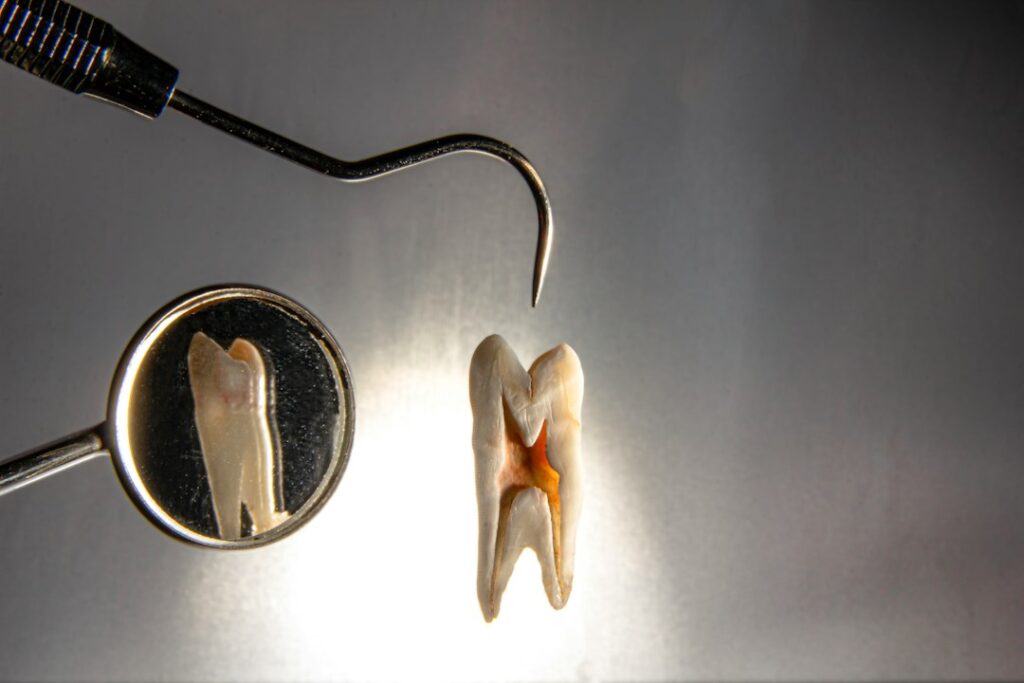
A dental crown is a tooth-shaped covering placed over a weakened or damaged tooth. It can restore chewing function, protect remaining tooth structure, and reduce the chance that a compromised tooth will fracture further.
Needing a crown is not determined by pain alone. Some teeth that require protection cause little or no discomfort, while sensitivity can sometimes be treated with a filling, inlay, onlay, or another conservative option. The decision depends on how much healthy tooth remains, where the damage is located, and whether the tooth can reliably support a restoration.
What is a dental crown?
A crown covers most or all of the visible portion of a tooth above the gumline. Unlike a filling, which replaces a limited area of missing tooth structure, a crown surrounds and reinforces a tooth that has lost substantial strength.
Crowns may be made from ceramic, porcelain-fused materials, metal, or other dental materials. The appropriate choice depends on the tooth’s location, bite forces, appearance, available space, and the amount of remaining enamel and dentin.
A crown may be placed over a natural tooth or attached to a dental implant. These are different situations: an implant crown replaces the visible portion of a missing tooth, while a crown on a natural tooth protects and restores the tooth’s remaining structure.
What are the most common signs that a crown may be needed?
The clearest warning signs are repeated damage, a large existing restoration, or loss of tooth structure. Symptoms that deserve evaluation include:
- Pain when biting or releasing a bite
- A visible crack, broken cusp, or missing portion of a tooth
- Sensitivity to cold or heat that lingers after the stimulus is gone
- A tooth that feels weak or develops repeated fractures
- A large filling that has loosened, cracked, or fallen out
- Food repeatedly becoming trapped around one tooth
- A darkened tooth after an injury
- Difficulty chewing on one side because a tooth feels uncomfortable
These symptoms do not prove that a crown is necessary. For example, brief cold sensitivity may result from a smaller cavity, gum recession, or enamel wear. Pain on biting can be associated with a crack, an inflamed nerve, a loose filling, or an uneven bite.
Does a large filling mean a crown is necessary?
Not always. A large filling can remain serviceable if enough tooth structure surrounds it and the tooth is not under unusual stress. However, a filling that occupies much of a back tooth may leave the remaining cusps vulnerable to flexing and fracture.
A crown becomes more likely when:
- The filling involves several surfaces of the tooth
- The tooth has thin or unsupported cusps
- The filling has fractured repeatedly
- The tooth has already lost a significant amount of natural structure
- The tooth experiences heavy biting or grinding forces
In some cases, an onlay or another partial-coverage restoration can protect the tooth while preserving more natural structure than a full crown. The best option depends on the shape and extent of the damage.
Can a cracked tooth be repaired with a crown?
A crown can often stabilize a cracked tooth when the crack is limited to the crown of the tooth and the tooth remains restorable. Covering the biting surfaces may help hold the remaining portions together and reduce the movement that triggers pain.
Cracks vary considerably. A faint enamel craze line may not need treatment at all. A deeper crack can extend toward the pulp, the living tissue inside the tooth, and may require root canal treatment before the crown is placed. A crack that extends below the gumline or down the root may make the tooth difficult or impossible to save.
Pain that occurs when releasing a bite, especially after chewing something firm, is a common reason to have a tooth evaluated promptly. Avoiding hard foods on that side may reduce further damage while waiting for an examination, but it does not repair the crack.
Is a crown usually needed after a root canal?
Often, but not in every case. Root canal treatment removes infected or inflamed tissue from inside the tooth. The remaining tooth may then have less internal support, particularly when the original decay, fracture, or restoration was extensive.
Back teeth generally receive stronger biting forces, so they are more likely to need cuspal protection with a crown or another full-coverage restoration. Some front teeth may be restored with a filling or bonded material if enough structure remains and the tooth is not heavily weakened.
The timing matters. A root canal does not automatically guarantee that a crown is appropriate, and delaying protection on a structurally weakened tooth can increase the risk of fracture. The restoration plan should account for the amount of remaining tooth, the tooth’s position, and the cause of the original problem.
When might a crown not be the right choice?
A crown may not be appropriate if the tooth has too little healthy structure to support it, if decay extends too far below the gumline, or if a crack reaches the root. In those situations, other treatment options may need to be considered.

A crown may also be unnecessary when:
- A small or moderate cavity can be restored with a filling
- A minor chip affects appearance but not structural strength
- A worn area can be treated with bonding or monitored
- An intact tooth has a harmless enamel craze line
- A partial restoration can provide sufficient protection
Preserving natural tooth structure is generally a central goal of restorative care. Covering a tooth simply because it is discolored or mildly sensitive may remove more structure than needed.
How is the need for a crown determined?
The evaluation usually includes a visual examination, bite testing, assessment of existing fillings, and dental X-rays when indicated. The clinician may also inspect the gumline, check for movement, assess the bite, and use magnification or specialized lighting to look for cracks.
The most useful questions are not only “Does this tooth hurt?” but also:
- How much sound tooth structure remains?
- Is the tooth stable under biting pressure?
- Does the nerve appear healthy?
- Is the damage above or below the gumline?
- Can a filling or partial-coverage restoration protect it?
- Is the tooth likely to withstand normal chewing after treatment?
A second opinion can be reasonable when the recommended treatment is extensive, the diagnosis is uncertain, or the tooth has several possible treatment paths.
When is a damaged tooth urgent?
Prompt dental evaluation is warranted for swelling, fever, facial tenderness, a foul taste, drainage, severe or worsening pain, or difficulty opening the mouth. These signs can indicate infection rather than a problem that can be solved by placing a crown alone.
A broken tooth with a sharp edge, exposed inner tissue, or rapidly increasing sensitivity also deserves timely attention. Until it is evaluated, avoid chewing on the affected side, keep the area clean, and do not place aspirin directly on the gum or tooth.
For residents in Tulsa, seasonal outdoor activities, sports, and occasional falls or vehicle-related injuries can all contribute to chipped or fractured teeth. Wearing a properly fitted mouthguard during contact sports and avoiding chewing ice or very hard objects can reduce preventable damage. Nighttime grinding may also need attention if crowns, fillings, or natural teeth are repeatedly breaking.
A crown is best understood as a structural decision, not simply a cosmetic one. The strongest indication is usually a tooth that has lost enough support that a filling or smaller restoration may not protect it during normal function.